
The Village That Refuses Strangers
Cartes Postales from GreeceThis thread follows the contrast between Anthony’s encounters with welcome and the hostile fishing village whose hidden history makes a beautiful place dangerous.
increasing Bearing strength in each event
 decreasing
Bearing strength in each eventdecreasingA Picture-Perfect Arrival
A Picture-Perfect Arrival
Beauty suggests welcome
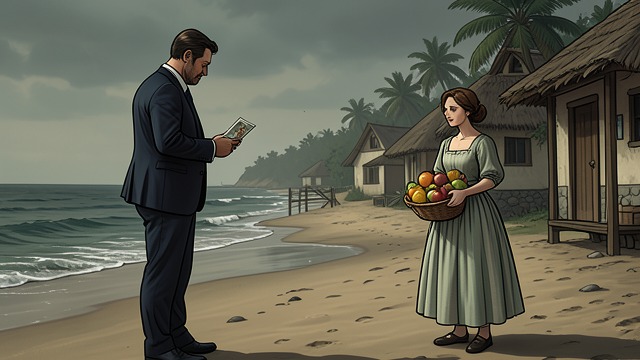
Anthony finds a sheltered harbor, clear water, fishing boats, and a sandy cove. The village seems abundant and untouched by tourism.
Something feels wrong
Restaurants serve locals but respond dismissively to a visitor. There are no rooms, postcards, or ordinary tourist provisions.
The village’s beauty and its refusal of outsiders create a tension Anthony cannot initially explain.
A Night in the Wrong Place
A Night in the Wrong Place
Discomfort drives him away
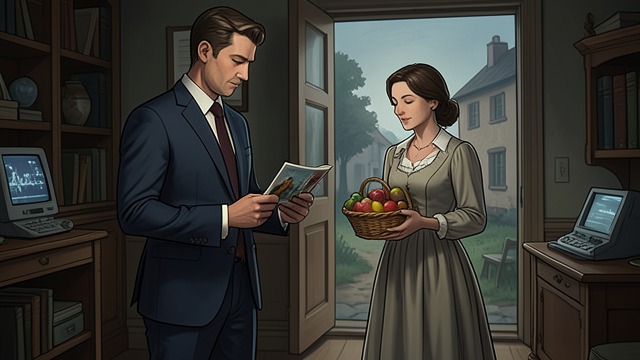
Anthony has an overpriced meal and senses that he is unwelcome. He leaves after dark, driving a long distance before stopping in an ordinary town.
A host recognizes the name
The next morning, a hotel owner reacts with disbelief when Anthony describes where he stayed. He says that people avoid the village because something terrible happened there.
The stranger’s reaction confirms Anthony’s unease without yet supplying an explanation.
A Honeymoon Detour
A Honeymoon Detour
The couple enters unknowingly
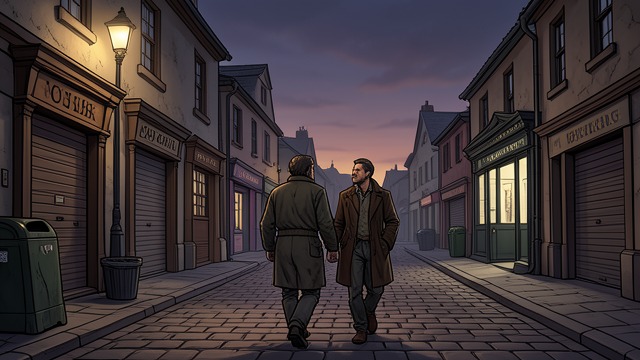
Sylvie and Jean-Luc walk into the village after their hire car runs out of petrol. They do not know that the Orthodox Easter calendar differs from the one they expect.
Local customs are misread
Closed shops, an empty police room, and Easter preparations appear to them as inexplicable hostility. Their inability to speak Greek limits their ability to understand what is happening.
Their accidental arrival puts them inside a community whose rules are not explained to outsiders.
The Village Enforces Its Rule
The Village Enforces Its Rule
Confinement becomes explicit
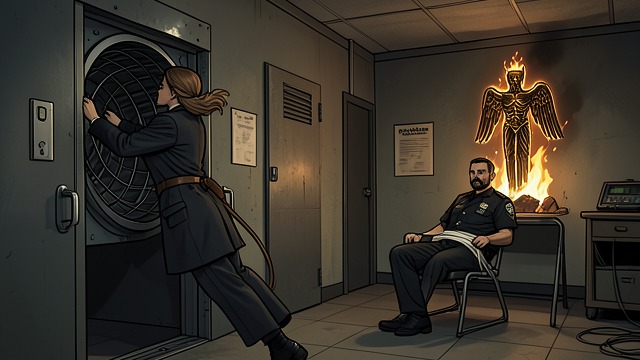
Sylvie discovers the couple has been locked behind bars in the police station. She escapes through a vent, while Jean-Luc remains trapped.
Ritual and threat converge
During the burning of Judas, Sylvie fears that the village’s celebration may conceal a human killing. The community acts as a closed system, and nobody steps forward to help her.
A local tradition turns the visitor’s ignorance into an apparent offense with deadly implications.
An Uneasy Explanation

An Uneasy Explanation
Local knowledge replaces evidence
Doctors and nurses recognize the rumors about the village’s Easter custom. They believe Sylvie’s story, but the absence of a body leaves no proof that Jean-Luc was killed.
The outsider bears suspicion
Police investigate Sylvie, whose broken wrist and missing wedding ring seem to support other explanations. The community closes ranks rather than clarifying what happened.
Anthony’s earlier discomfort acquires a darker meaning: hospitality can be measured by how a place treats those who do not know its rules.
A late afternoon after Anthony travels down the east coast
The night Anthony leaves the village
Good Friday evening, years before Anthony visits
Holy Saturday night
Easter Sunday morning, after Sylvie reaches the hospital
